What Is Childcare Classroom Management?
Category: Childcare Operations
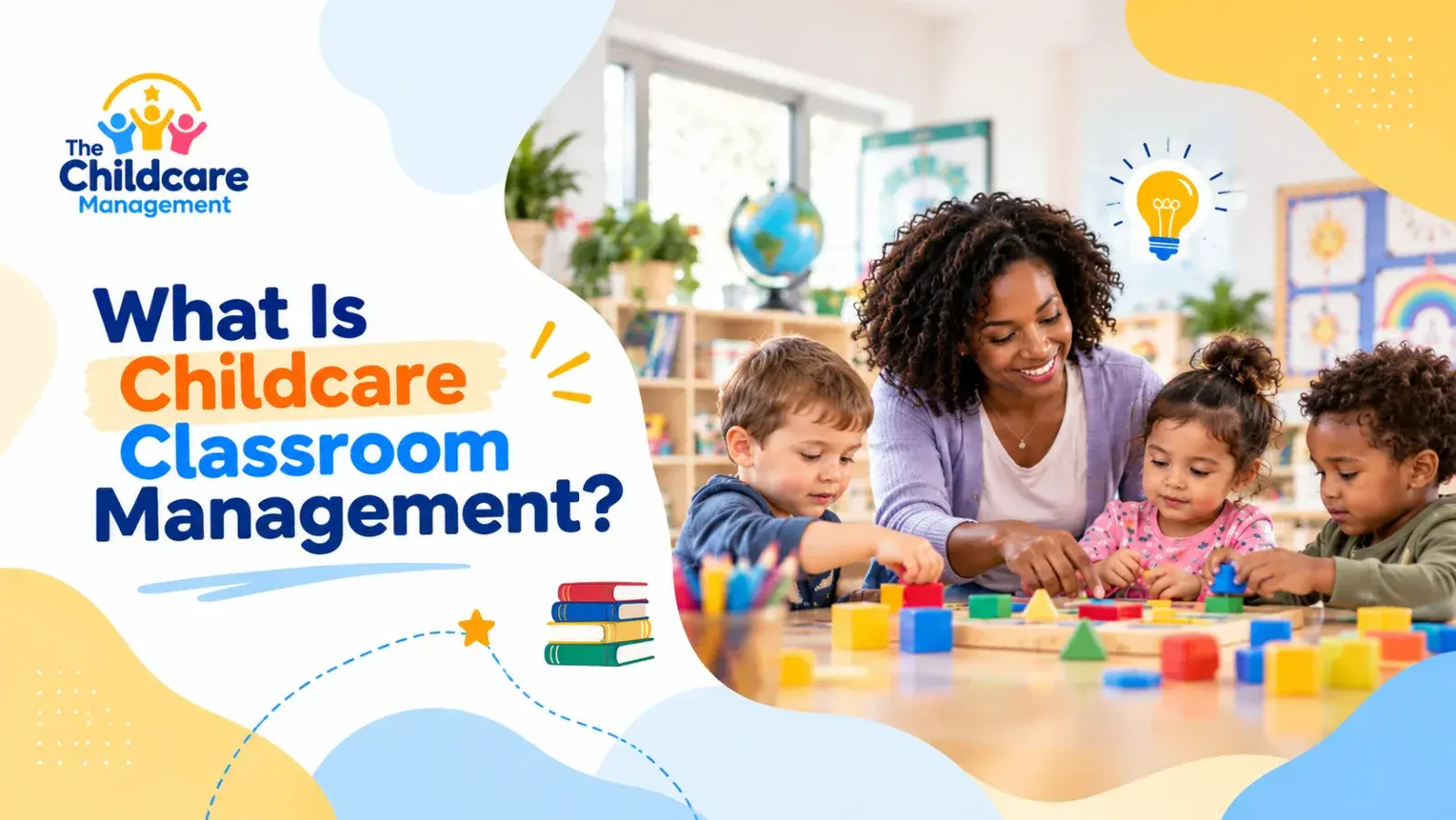
What Does Childcare Classroom Management Include?
Childcare classroom management includes everything educators do to make the classroom safe, predictable, inclusive, and ready for learning. It begins with the physical environment and continues through the daily schedule, child interactions, classroom expectations, supervision, transitions, and responses to challenging situations.
The physical environment is an important part of management. A room with clear activity areas, reachable materials, safe walking paths, and visible storage helps children understand how the space works. When children can see where blocks, books, art supplies, and pretend-play materials belong, they can participate more independently.
The daily schedule is another part of management. Children benefit from a familiar rhythm that includes arrival, play, meals, rest, outdoor time, group experiences, and departure. The schedule does not need to be rigid. Young children need flexibility, but they also need to recognize the general pattern of the day.
Educator behavior matters just as much as classroom rules. Children watch how adults speak, listen, wait, solve problems, and respond to mistakes. A calm adult can help a child settle, while a rushed or frustrated response can make an already difficult moment more intense.
Effective management also includes observation. Educators learn a great deal by noticing when behavior occurs, what happened beforehand, how the environment was arranged, and what happened afterward. This information makes it easier to respond to the underlying need rather than reacting only to the visible behavior.
Why Is Childcare Classroom Management Important?
Childcare classroom management is important because young children learn best in environments that are safe, predictable, responsive, and emotionally supportive. When children understand what is happening and trust the adults around them, they are more likely to explore, communicate, participate, and recover from frustration.
A consistent classroom routine provides emotional security. A child who knows where to place a backpack, what happens after outdoor play, and who will help when something feels difficult has a stronger sense of control. Predictability is especially helpful during arrival, transitions, and other moments when children may feel uncertain.
Good management also protects learning time. If educators spend most of the morning searching for materials, repeating unclear instructions, or resolving avoidable conflicts, children lose opportunities for meaningful play. A prepared environment allows teachers to spend more time talking with children, asking questions, extending their ideas, and observing development.
Classroom management supports social and emotional growth. Children learn to wait, negotiate, express feelings, ask for help, and repair relationships through repeated practice. These skills do not develop because adults simply tell children to behave. They develop when adults model them, teach them directly, and support children through real situations.
A well-managed room can also reduce stress for educators. No classroom is free from challenging behavior, but clear routines and shared expectations give staff a common foundation. When educators respond in similar ways, children receive more consistent guidance and adults are less likely to feel that they are managing problems alone.
The Connection Between Environment and Behavior
Children’s behavior is influenced by the environment around them. A crowded room, long waiting period, confusing transition, or difficult-to-reach material can create frustration even when children are interested and willing to participate.
Observe how children move through the classroom. If several children argue in one area, the space may be too small or the materials may be limited. If children regularly run across the room, the layout may not provide a clear movement path. If art activities end in repeated spills, the materials or furniture may need to be adjusted rather than simply telling children to be more careful.
Defined areas can help children understand the difference between quiet and active play. A reading space may need softer lighting and fewer interruptions, while a block area may need enough room for children to build and move around their structures. Dramatic play, sensory activities, and creative work can be arranged so children know where each kind of activity belongs.
Storage should support independence. Shelves that are too high, containers that are difficult to open, or labels that children cannot understand make it harder for them to manage materials. Pictures, simple words, and consistent locations can help children take part in choosing and putting away resources.
The environment should also reflect the children who use it. Include books, images, materials, and dramatic-play resources that represent different families, cultures, abilities, languages, and experiences. An inclusive environment communicates that every child belongs in the classroom.
Predictable Routines Help Children Feel Secure
Routines are repeated patterns that help children understand what happens next. They reduce the need for educators to give constant directions and help children gradually develop independence.
A routine does not mean that every activity must happen at exactly the same minute. A childcare day can change because of weather, staffing, special activities, sleep needs, or a child’s individual needs. What matters is that the main sequence remains understandable and educators explain significant changes in advance.
Visual schedules can be useful, especially for toddlers and preschoolers who are still developing a sense of time. Photographs, simple drawings, symbols, or objects can show the order of activities. An educator may point to the schedule and explain that playtime comes before lunch or that outdoor time will happen after everyone has put away the materials.
Children also benefit from warnings before an activity ends. A short reminder gives them time to finish a drawing, place the final block, or say goodbye to a friend. Sudden transitions can feel like interruptions, while a prepared transition helps children move more willingly.
Routines should be taught rather than assumed. Educators can demonstrate how to wash hands, line up safely, choose a center, carry materials, or get ready for rest. Practice is especially important at the beginning of a new school year, after a room change, or when children are learning a new expectation.
Positive Guidance Instead of Punishment
Positive guidance means helping children learn appropriate behavior through connection, teaching, modeling, and consistent support. It does not mean ignoring unsafe behavior or allowing children to do whatever they want. It means responding in a way that protects children while building the skills they need for future situations.
Young children often behave in ways that reflect a developing skill rather than a deliberate intention to cause trouble. A child may grab a toy because they do not know how to ask for a turn. Another child may shout because they cannot yet explain that the room feels too noisy. A preschooler may leave group time because the activity is too long or because they do not understand how to participate.
Educators can respond by describing what happened and showing the child what to do next. Instead of saying, “You are being bad,” an educator might say, “You wanted the truck, and you grabbed it. Grabbing hurts. You can say, ‘Can I have a turn when you are finished?’” The child receives a clear boundary and a replacement skill.
Specific feedback is more helpful than general praise. Saying, “You waited until Maya finished talking,” or “You carried the water carefully to the table,” tells children exactly what they did well. This helps them understand the behavior the educator wants to encourage.
Guidance should be appropriate to the child’s age and development. Infants need responsive care and safe spaces rather than verbal rules. Toddlers need short directions, repetition, movement, and immediate support. Preschoolers can participate more actively in problem-solving, classroom responsibilities, and conversations about group agreements.
Managing Transitions Without Constant Conflict
Transitions are the moments when children move from one activity or place to another. They include cleaning up, washing hands, going outside, coming inside, preparing for meals, and getting ready for rest. These moments can be difficult because children may be tired, deeply involved in play, or unsure about what will happen next.
Prepare the transition before it begins. Tell children what is coming, explain what they need to do, and give them enough time to respond. A familiar song, visual cue, movement game, or classroom job can make the transition feel more active and less like a sudden interruption.
Avoid creating long periods in which children have nothing to do. If a small group is washing hands, another group may look at books, complete a simple matching activity, or help prepare the table. Staggering routines can reduce crowding and give educators more opportunities to supervise.
Use transitions as learning experiences. Children can count steps, identify colors, carry materials, notice changes in the weather, or talk about what they will do next. When transitions have a clear purpose, children are more likely to remain engaged.
If one transition repeatedly becomes difficult, observe it rather than simply increasing the number of reminders. The problem may be connected to timing, group size, hunger, fatigue, unclear instructions, or an environment that is difficult to navigate.
Supporting Children During Challenging Behavior
Challenging behavior can include hitting, biting, pushing, throwing, screaming, running away, refusing to participate, or repeatedly disrupting other children’s play. The behavior may be stressful, but it is also information. It can show that a child needs help with communication, emotional regulation, sensory processing, relationships, or a particular classroom routine.
The first responsibility is safety. Move close, block unsafe actions when necessary, and use calm, brief language. An educator might say, “I will not let you hit,” while helping the children separate. The child who was hurt should receive immediate attention, and the child who caused the harm should be supported without being publicly shamed.
After the situation is calm, think about what happened before the behavior. Did the child have to wait? Was a favorite toy unavailable? Was the room noisy? Did the child understand the instruction? Was there a recent change at home or in the classroom? These questions can reveal a pattern.
The educator can then teach a safer response. A child may need words for asking for help, a visual signal for requesting a break, practice waiting for a turn, or an opportunity to move to a quieter space. The goal is not merely to stop the current incident. The goal is to give the child a tool that can be used next time.
If behavior is frequent, intense, or creating a safety concern, document observations and work with the center team and family according to the service’s policies. Seek appropriate professional support when needed, and avoid making assumptions about a child’s diagnosis or motives.
Building a Strong Classroom Community
Classroom management becomes easier when children feel connected to the group. Relationships are built through warm greetings, attentive listening, shared play, and respectful conversations. A child who feels noticed and valued is more likely to seek help instead of using unsafe behavior to get an adult’s attention.
Create opportunities for children to work together. Children can build a structure as a group, prepare materials for an activity, care for classroom plants, or help return books to a shelf. These experiences teach cooperation without turning every social skill into a formal lesson.
Talk about feelings in ordinary moments, not only during a conflict. Educators can name their own feelings in simple ways, help children notice facial expressions, and read stories about frustration, excitement, disappointment, friendship, and repair. This expands children’s emotional vocabulary.
Group agreements can be created with preschool children using simple language and pictures. Instead of a long list of prohibitions, focus on a few ideas that children can understand, such as keeping bodies safe, taking care of materials, listening to others, and asking for help.
A strong classroom community is inclusive of different communication styles and abilities. Some children may need visual support, movement breaks, sensory adjustments, extra processing time, or alternative ways to participate. Adapting the environment is part of effective management, not a special favor.
Working With Families
Families bring valuable knowledge about a child’s routines, interests, language, culture, temperament, and recent experiences. Educators should invite this information and use it to understand the child more fully.
Communication should not happen only when there is a problem. Share children’s interests, efforts, discoveries, and relationships as well as concerns. A specific observation helps families see what their child experienced and creates a natural starting point for conversation.
When discussing difficult behavior, use factual and respectful language. Explain what educators observed, what support was provided, and what the team is trying next. Ask whether the family notices similar patterns at home. Avoid labels that describe the child as difficult, aggressive, or bad.
Families may have different communication preferences, schedules, languages, and expectations. A center can use conversations, written updates, meetings, and secure digital communication to keep information organized. Technology that brings attendance, daily reports, and parent messages into one place can reduce administrative confusion, but personal relationships and professional judgment remain essential.
The most helpful partnership is based on shared problem-solving. The educator brings observations from the classroom, while the family brings knowledge from home. Together, they can identify strategies that are consistent enough to support the child without expecting home and childcare to be exactly the same.
Supporting Educators as a Team
Children receive clearer guidance when educators share basic expectations and understand how the classroom operates. Staff do not need to use identical words in every situation, but they should agree on important boundaries, safety procedures, transition routines, and ways of responding to conflict.
Discuss classroom management during staff meetings. Review what is working, where children are struggling, and whether the environment needs to change. Use observations rather than blame. If one strategy is not helping, ask what the team has learned and what adjustment might be more useful.
New educators need an introduction to the classroom’s routines, supervision plan, communication expectations, and behavior guidance approach. Substitute teachers and temporary staff also need enough information to maintain safety and consistency.
Educator wellbeing matters. Constant noise, rushed transitions, difficult behavior, and unclear responsibilities can lead to exhaustion. Directors can support staff by planning realistic routines, providing materials, making time for collaboration, and responding to repeated classroom problems at the system level rather than leaving one educator to manage alone.
Common Classroom Management Mistakes
One common mistake is using vague directions. Phrases such as “Be good” or “Calm down” do not tell children what to do. Clear instructions describe the expected action, such as walking inside, keeping hands safe, or placing the blocks on the shelf.
Another mistake is expecting young children to wait for too long. Long waiting periods often create boredom, noise, and conflict. Preparing materials in advance and dividing the group into smaller transitions can make a significant difference.
Public shame is another ineffective approach. Calling a child naughty or difficult may stop a behavior in the moment, but it can damage trust and does not teach a replacement skill. Correct the unsafe action while protecting the child’s dignity.
Educators may also change strategies too quickly. Children need repetition before a new routine becomes familiar. Give a reasonable strategy time to work, observe the result, and make adjustments based on what actually happens.
Finally, do not overlook the physical environment. If the room is crowded, materials are difficult to reach, or activity areas are unclear, the solution may involve rearranging the space rather than giving more instructions.
How to Improve Classroom Management Over Time
Improvement is easier when the team focuses on one priority at a time. Choose the issue that most affects safety, learning, or educator wellbeing. Observe it for several days and record the time, place, activity, children involved, possible trigger, and adult response.
Make one practical change. The team might adjust the room layout, shorten a group activity, add a visual schedule, offer duplicate materials, or change the way a transition is announced. Teach the replacement behavior directly and use the new approach consistently.
After a period of observation, review whether the change helped. Consider whether children are more engaged, whether the behavior has reduced, and whether educators feel the routine is easier. Keep what works and refine what does not.
This process encourages professional learning. It also prevents the team from treating a child’s behavior as a fixed personal problem when the environment or routine may be contributing to the difficulty.
Conclusion: Create Structure That Helps Children Thrive
Childcare classroom management is the practice of creating the conditions children need to feel safe, connected, curious, and capable. It combines thoughtful room design, predictable routines, active supervision, respectful guidance, meaningful choices, family partnership, and teamwork among educators.
The strongest classrooms are not those where children never make mistakes. They are classrooms where adults treat mistakes as opportunities to teach, children are supported through strong emotions, and routines are adjusted when they do not meet the group’s needs.
Begin with one part of the day that feels difficult. Observe what is happening, consider the environment and the children’s developmental needs, make a practical change, and review the result with your team. Small, consistent improvements can create a calmer classroom without taking away the creativity and energy of early childhood.
For centers that want to reduce administrative distractions while keeping educators focused on children, tools for attendance and family communication can provide useful support. The important choice is to select systems that fit the center’s values and workflow rather than allowing technology to replace the human relationships at the heart of childcare.
The purpose is to create a safe, predictable, and inclusive environment where children can learn, play, build relationships, and develop independence. It is not simply about preventing noise or eliminating every challenging behavior.
The most important parts include the physical environment, daily routines, active supervision, respectful relationships, clear expectations, positive guidance, transition planning, and consistent teamwork among educators.
Start by identifying why the room is noisy. Children may need more movement, smaller groups, shorter activities, clearer directions, or better-defined play areas. Teach different voice levels for different activities and reduce long waiting periods.
Protect the children, use calm and brief language, attend to the child who was hurt, and help the other child regulate. Once everyone is calm, look for possible triggers and teach a safer way to communicate or ask for help. Follow the center’s incident and safeguarding procedures.
Educators can provide visual support, adapt the environment, offer different ways to participate, consider sensory needs, allow processing time, and work with families and specialists when appropriate. Inclusion means helping each child access the classroom rather than expecting every child to respond in exactly the same way.
Parents can share information about routines, interests, communication styles, and recent changes. They can use similar language for feelings and transitions at home while recognizing that each setting may have different routines and expectations.
Technology such as childcare management software can reduce administrative work by organizing attendance, daily reports, family messages, and routine records. It cannot replace supervision, relationships, observation, or professional decision-making. Its value depends on whether it is simple, secure, and used consistently.

TheChildcareManagement.com provides practical tips, resources, and expert insights to help childcare and daycare professionals run, manage, and grow successful centers.
Explore
Copyright ©2026 TheChildcareManagement


