How to Choose the Right Child Care Center for Your Child
Category: Licensing and Compliance

Choosing a child care center is one of the most important decisions a family makes during a child’s early years. Parents are not simply selecting a place where their child will spend the day. They are choosing the adults, routines, environment, communication style, and learning experiences that will shape a significant part of their child’s daily life.
The right center should provide more than convenient hours and an available space. It should offer a safe and welcoming environment, responsive educators, developmentally appropriate experiences, clear communication, and routines that fit the child and family. It should also be managed in a way that gives parents confidence that important information is organized and that staff have the support they need to care for children well.
Every family has different priorities. One parent may need a center close to work, while another may care most about outdoor play, flexible scheduling, language support, or a specific educational approach. Cost, location, hours, classroom size, meals, transportation, and availability all matter. At the same time, families should look beyond the basic practical details and consider what the child will experience each day.
This guide explains how to choose the right child care center for your child. It covers licensing, safety, educators, classroom environments, routines, learning, communication, technology, family involvement, cost, visits, questions to ask, warning signs, and the process of making a final decision. It also explains why strong center management can make a difference to the quality and consistency of family experiences.
Start by Understanding Your Family’s Needs
Before contacting child care centers, take time to understand what your family needs. A clear picture of your schedule, budget, preferences, and child’s personality will make it easier to compare programs fairly.
Consider the days and hours when care is needed, how the child will travel to the center, and whether the schedule needs to change during holidays or work shifts. Think about the child’s current routines, including sleep, meals, toileting, comfort items, languages, and transitions. A center that works well for one family may not be suitable for another because daily circumstances are different.
Your child’s age and developmental stage will also influence the choice. Infants may need a quiet environment, responsive feeding and sleep routines, and close communication with caregivers. Toddlers may benefit from safe movement, predictable transitions, and support with emerging independence. Preschoolers may need rich play experiences, language opportunities, social development, and preparation for their next educational setting.
Write down your essential needs and your preferences. Essential needs might include location, hours, licensing, cost, or care for a specific age group. Preferences might include a large outdoor area, a particular curriculum, meals prepared on site, or a certain communication platform. This distinction helps you make a decision when no center matches every preference perfectly.
Confirm Licensing and Quality Information
The first step in evaluating a child care center is confirming that it is licensed or approved according to the rules that apply in your area. Licensing requirements vary, but they commonly address health, safety, staffing, facilities, records, supervision, and emergency procedures.
Parents can contact their state, territory, or local child care agency to learn how to check a program’s status and whether public information about inspections or violations is available. A center should be willing to explain its licensing status and provide information about the standards it follows.
Quality information may also include accreditation, participation in a quality rating system, professional credentials, or recognition from a local early childhood organization. These indicators can provide useful context, but they should not replace a visit and a conversation with the center.
Ask how the center handles required records, health information, attendance, incidents, emergency drills, and staff training. A well-managed center should have clear procedures and should be able to explain them in language families can understand.
Licensing is an important foundation, but it is not the only measure of quality. Use it as one part of the decision rather than assuming that a license alone tells you what the daily experience will feel like.
Visit the Center in Person
A website or phone call can provide basic information, but a visit helps you understand the atmosphere. Whenever possible, visit more than one center and allow enough time to observe the environment rather than rushing through a short tour.
Notice how staff welcome you and how they speak with children. Do educators get down to a child’s level, listen carefully, and respond with patience? Are children engaged in play, conversation, movement, or creative activities? Do adults appear aware of what is happening around them?
Look at the condition of the rooms. The space does not need to be perfect or silent. Young children create messes as they explore. However, the room should be reasonably clean, safe, organized, and arranged for children to use. Materials should be accessible, walkways should be clear, and furniture should be appropriate for the children’s ages.
Pay attention to the overall feeling of the center. You may notice whether the environment feels calm, welcoming, hurried, noisy, warm, or disconnected. There is no single correct atmosphere because a good early childhood room can be energetic and active. The important question is whether the energy appears purposeful and whether children are supported within it.
Ask if you can observe a typical classroom routine rather than only a prepared tour. A center may look different during arrival, meals, outdoor transitions, rest, or departure. These everyday moments can tell you a great deal about how the program is managed.
Look Closely at the Educators
Children’s relationships with educators are at the heart of child care quality. A beautiful building cannot make up for adults who are unavailable, dismissive, or inconsistent. During your visit, observe whether educators are attentive and responsive to the children in front of them.
Ask about staff qualifications, experience, ongoing training, and turnover. High turnover can have many causes, so it should not automatically disqualify a center. However, the director should be able to explain how the center supports staff and maintains continuity for children when changes occur.
Find out how new educators are introduced to the center’s routines, safety procedures, curriculum, family communication, and behavior guidance approach. Ask how substitute or temporary staff receive information about the classroom.
Consider how educators respond when a child is upset. Do they try to understand the child’s need, offer comfort, set a clear boundary, and help the child return to the group? Ask how the center handles challenging behavior and whether its approach is based on teaching skills and positive guidance rather than shame or harsh punishment.
Your child may not connect equally with every adult, but the overall team should be respectful, patient, and interested in children. Parents should feel comfortable asking questions without being treated as an inconvenience.
Check the Classroom Size and Staffing Structure
The number of children in a classroom and the number of educators available affect the daily experience. Smaller groups can make it easier for adults to notice individual needs, support relationships, and respond before problems grow.
Ask about group size, staffing levels, age ranges, and how the center manages breaks, absences, and busy transition periods. Compare the information with local requirements, but also think about how the arrangement feels in practice. A room may meet a minimum standard and still feel too crowded for your child’s temperament or needs.
Find out whether children remain with the same group and educators throughout the day or move between rooms. Transitions can be appropriate, but young children need preparation and consistent support when routines change.
Ask what happens when a classroom educator is absent. A clear plan can reduce disruption and help children feel secure. The center should be able to explain how it maintains supervision and communication when staffing changes unexpectedly.
Understand the Center’s Approach to Learning
Child care and early learning should include more than worksheets or structured lessons. Young children learn through play, conversations, movement, relationships, exploration, creative work, stories, and participation in everyday routines.
Ask the center to explain its educational approach in practical terms. What do children do during a typical day? How much time is available for child-led play? How do educators extend children’s ideas? How are learning experiences adapted for different ages, abilities, interests, and languages?
Look for a balance between predictable routines and meaningful choice. Children need enough structure to feel secure, but they also need opportunities to make decisions and follow their interests. A strong classroom may include group experiences, small-group work, outdoor play, open-ended materials, pretend play, reading, art, music, and quiet time.
Ask how educators observe and document children’s development. The center should be interested in the child’s progress, strengths, relationships, communication, physical development, problem-solving, and growing independence. Developmental information should be used to plan support rather than to compare children unfairly.
If your child has a disability, developmental concern, home language, dietary need, or other individual requirement, ask how the center creates an inclusive experience. The answer should include collaboration with families and appropriate professionals when needed.
Evaluate Safety, Health, and Supervision
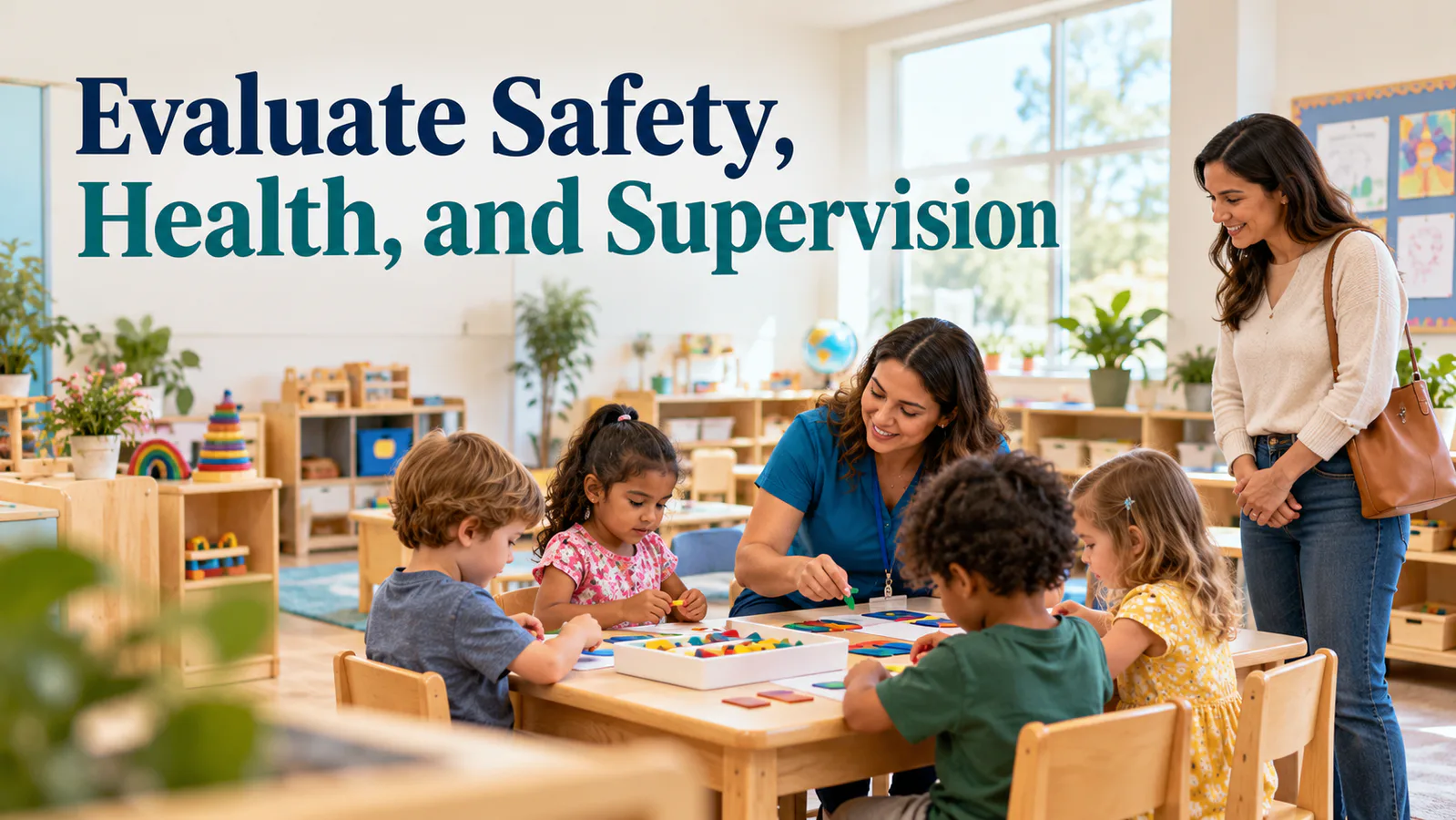
Safety should be visible in the way the center operates, not only in the written policies. Ask how staff supervise classrooms, outdoor areas, meals, rest periods, and transitions. Find out how the center manages allergies, medications, illness, injuries, hygiene, handwashing, and emergency drills.
Observe whether educators can see and hear the children they are responsible for. Check whether indoor and outdoor spaces are maintained, whether equipment appears age-appropriate, and whether hazardous materials are stored safely. Ask how the center handles visitors and keeps track of children during changes in location.
Health procedures should be explained clearly. Ask when children must stay home, how families are notified about illness exposure, how medication is stored and administered, and how staff respond to a child who becomes sick during the day.
Emergency planning is another important area. Ask how the center responds to fire, severe weather, medical emergencies, building evacuation, or a communication outage. Families should know how they will receive information during an emergency and where records are maintained.
A center may not share every confidential detail, but staff should be able to explain the general process and direct you to written policies. Hesitation or vague answers about basic safety procedures deserve further consideration.
Ask How the Center Communicates With Families
Communication is a major part of the child care experience. Parents need to know how to share information with educators, receive updates, ask questions, report an absence, discuss concerns, and learn about changes to the schedule.
Ask whether communication happens through conversations, phone calls, email, paper notes, a parent app, or a combination of methods. Find out how daily updates are shared and what information they usually include. A useful report may cover activities, meals, rest, mood, interactions, and meaningful observations rather than only stating that the child had a good day.
Ask how quickly staff usually respond to non-urgent messages and what families should do if they need an immediate response. Educators need uninterrupted time to supervise children, so a center should have realistic expectations about communication during the day.
Technology can make communication more organized when it is used as part of a clear center process. Platforms such as KidPro childcare management software bring features such as parent messaging, daily reports, Check In - Check Out information, and other childcare operations into one digital workflow. For families, the important question is whether the system makes information easier to receive and understand while preserving personal communication with educators.
Ask how the center protects family information and photographs. Parents should understand who can access messages and reports, how consent is managed, and what to do if information is sent incorrectly. A modern platform is useful only when the center uses it responsibly.
Consider How the Center Is Managed
Good center management affects the child’s daily experience even when parents do not see every administrative task. When attendance, enrollment, staff records, classroom information, health details, and family communication are organized, educators can spend less time searching for information and more time with children.
Ask how the center manages attendance and arrival information, records incidents, shares classroom updates, and keeps family details current. The director should be able to explain who is responsible for reviewing records and how staff handle mistakes.
Find out whether the center uses paper records, digital tools, or a combination. The technology itself is not the deciding factor. What matters is whether the system is accurate, secure, easy for staff to use, and connected to clear procedures.
Strong management also includes communication between the director and educators. Ask how staff share information about children, how concerns are escalated, and how families are included in decisions about their child’s care. A center that is organized behind the scenes often provides a more consistent experience at the classroom level.
Management should support relationships rather than replace them. Families should not feel that every question must go through an app, and educators should not spend so much time documenting that they cannot interact with children.
Review Daily Routines and the Environment
A typical daily schedule should provide a balance of activity, rest, indoor and outdoor play, group experiences, meals, and flexible time. Ask what happens from arrival through departure and how the routine changes for infants, toddlers, and preschoolers.
Children need preparation for transitions. Ask how educators help children move from play to meals, outdoors to indoors, or classroom activities to rest. Visual schedules, advance reminders, songs, classroom jobs, and small-group transitions can make the day easier for young children.
Ask how meals and snacks are handled. Find out whether families provide food, whether the center accommodates allergies and dietary restrictions, and how children are supported during meals. The environment should allow children to eat safely and participate in appropriate self-help routines.
Sleep and quiet time should also be discussed. Children have different sleep needs, and families should understand how the center creates a calm rest period. Ask whether infants follow individual sleep schedules and how the center communicates changes in rest patterns.
Outdoor play is important for movement, exploration, social interaction, and wellbeing. Ask how often children go outside, what happens during bad weather, and whether the outdoor environment includes a range of safe experiences rather than only one type of equipment.
Compare Cost With Overall Value
Cost is an important part of choosing child care, but the lowest price may not represent the best value for your family. Compare what is included in the fee, such as meals, supplies, extended hours, transportation, enrollment costs, late fees, vacation policies, and extra programs.
Ask whether the price is weekly, monthly, daily, or based on attendance. Find out how schedule changes affect the fee and what happens when the center is closed. Review the payment schedule carefully so there are no surprises later.
Some families may qualify for assistance, employer benefits, tax support, scholarships, or a different fee arrangement. Ask the center which resources are available in your area and what documents are needed.
Value also includes the quality and consistency of care. A center that is convenient but frequently changes classrooms may create a different experience from a center that offers stable relationships but requires a longer commute. Consider the full effect on your child and family routine.
Do not feel pressured to decide before you understand the financial agreement. Request written information and ask questions about anything that is unclear.
Ask Direct Questions During the Visit
A tour is most useful when parents ask direct questions. You can ask what the center does when a child cries at drop-off, how educators handle biting or hitting, how families receive updates, and how staff respond when a child needs additional support.
Ask what a typical day looks like, how long children spend outdoors, how educators plan activities, how meals and naps are handled, and how individual routines are respected. Ask whether children have opportunities for both group activities and independent or child-led play.
Ask about staff turnover, substitute coverage, training, and how new employees are supported. Ask how the director communicates with families and how parents can raise a concern if the classroom approach is not working for their child.
It can also be helpful to ask how the center knows whether its program is working well. Does the team review family feedback, attendance patterns, observations, incidents, staff training, or classroom quality? A center that reflects on its practice is more likely to keep improving.
Take notes after each visit rather than relying on memory. Record what you saw, how staff answered questions, and how the environment made you feel. This will make comparison easier when several centers seem similar.
Notice Positive Signs and Warning Signs
Positive signs include educators who respond warmly to children, children who appear engaged and comfortable, clear safety procedures, accessible materials, clean and age-appropriate spaces, and a director who answers questions openly. A strong center does not need to look perfect. It should feel purposeful, respectful, and attentive.
Another positive sign is consistency between what the center says and what you observe. If the program describes child-led play, you should see children making choices and using open-ended materials. If it emphasizes family communication, staff should be able to explain how information moves between home and the center.
Warning signs may include staff who ignore children’s needs, unexplained restrictions on visits, unclear answers about licensing or safety, a consistently unhappy atmosphere, poor supervision, or pressure to enroll before you are ready. One small concern may have an explanation, but repeated concerns deserve attention.
Pay attention to how staff speak about children and families. Respectful language suggests a supportive culture. Labels, sarcasm, public criticism, or dismissive responses may indicate a problem with the center’s approach.
Trust your observations, but ask questions before making a final judgment. A busy room is not automatically unsafe, and a quiet room is not automatically high quality. Look for patterns and evidence.
Make the Final Decision as a Family
After visiting centers, compare the information with your original priorities. Consider safety, relationships, communication, learning, routines, location, cost, hours, and your child’s individual needs.
Ask yourself whether you can imagine your child feeling comfortable in the environment. Can you picture the educators noticing when your child is tired, excited, frustrated, or curious? Do you feel that the director would listen if a concern arose? Does the center’s approach match the values you want your child to experience?
Your first choice may not have an immediate opening. If you need to accept another option temporarily, continue evaluating the care after enrollment and stay involved in your child’s experience. A center should remain open to communication after the decision is made.
The right choice is not necessarily the most expensive, newest, largest, or closest center. It is the program that can provide safe, responsive, consistent, and developmentally appropriate care while working respectfully with your family.
Conclusion: Choose a Center Where Your Child Can Thrive
Choosing the right child care center requires more than finding an open space. It involves looking closely at relationships, safety, learning, routines, communication, inclusion, family partnership, and the way the center is managed.
Visit programs in person, ask direct questions, observe how educators respond to children, review licensing information, understand the costs, and compare each center with your family’s needs. The best choice is a place where children are treated with respect, families are welcomed as partners, and educators have the support needed to provide thoughtful care.
Strong management can make the daily experience more consistent. Attendance, enrollment, daily reports, and parent communication should be organized in a way that supports staff rather than distracting them from children. Families can ask centers how they use tools such as KidPro childcare management software to keep communication and daily operations more organized.
A child care decision does not need to be based on a perfect building or a long list of promises. Look for a center that is safe, responsive, transparent, and genuinely interested in your child. When the environment, educators, and family partnership work together, children have a stronger foundation for learning and wellbeing.
Parents should look at licensing, safety, educator relationships, classroom size, supervision, daily routines, learning experiences, family communication, cleanliness, cost, hours, and the center’s response to children’s individual needs. An in-person visit is important because it shows how the program feels in practice.
There is no required number, but visiting several programs makes comparison easier. Even two or three visits can reveal meaningful differences in atmosphere, communication, routines, and staff interaction. If possible, visit at a normal time rather than only during a highly prepared appointment.
Ask about supervision, emergency procedures, illness policies, medication, allergies, hygiene, incident reporting, attendance records, staff training, and visitor procedures. Observe whether educators can see and respond to children and whether the environment is maintained for the children’s age group.
Ask about the daily schedule, staffing, group sizes, staff turnover, educator qualifications, behavior guidance, family communication, meals, rest, outdoor play, emergencies, fees, and how the center supports children with different needs. Ask for clarification whenever an answer is vague.
Software is not a substitute for quality care, but effective center management can support accurate attendance, organized communication, daily reports, enrollment, and record keeping. Parents can ask how the center manages information and whether the system makes communication clear without replacing personal relationships.
It is essential. Parents and educators need to share information about routines, health, interests, behavior, development, and changes that may affect the child. Look for a center that welcomes two-way communication and explains how routine and urgent messages are handled.
TheChildcareManagement.com provides practical tips, resources, and expert insights to help childcare and daycare professionals run, manage, and grow successful centers.
Explore
Copyright ©2026 TheChildcareManagement


